
Where to ski in Nagano, Japan
The foreign ski experience in Nagano combines world-class snow with a sense of discovery that many international skiers find increasingly rare. While Japan is famous for its powder, Nagano stands out for offering deep, reliable snowfall alongside history, tradition, and a calmer atmosphere than more commercialized ski destinations.
For many overseas visitors, Nagano is their first introduction to “Japow.” Cold winter systems deliver light, dry snow that blankets the mountains consistently from midwinter through early spring. Slopes are well maintained, lift lines are generally short, and the pace feels relaxed. Compared with large North American or European resorts, skiing here often feels less crowded and more personal.
Après-ski in Nagano is less about loud parties and more about cultural immersion - unwinding in hot springs, savoring local food, and slipping into the rhythm of mountain life. For many foreign visitors, this quieter approach becomes one of the most memorable parts of a ski trip.
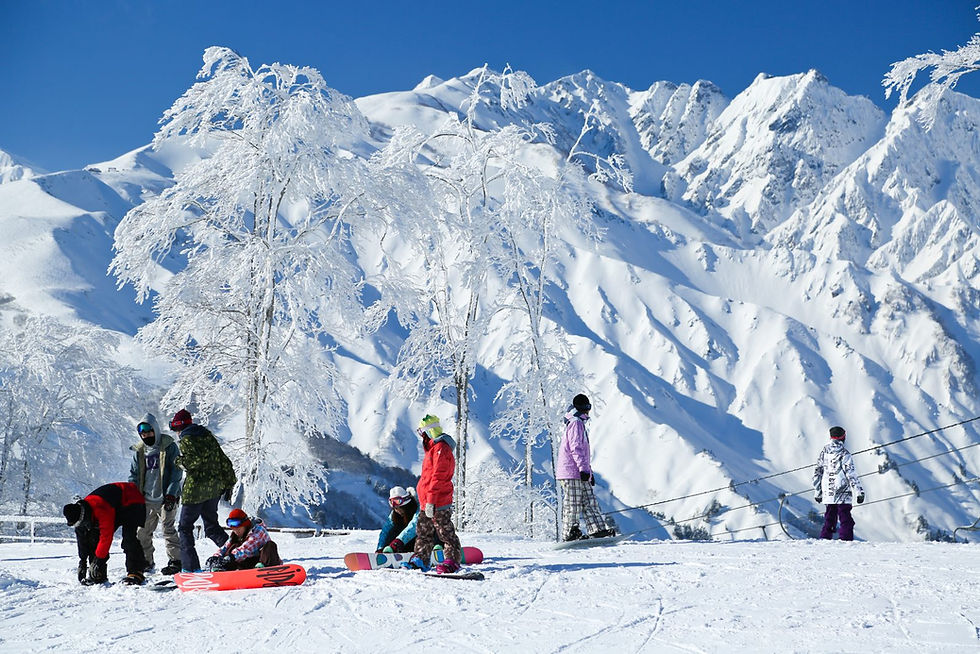
Much of the foreign ski scene centers on Hakuba Valley, which gained international recognition during the 1998 Winter Olympics. Hakuba’s cluster of resorts offers terrain for all levels, from gentle beginner runs to steep alpine bowls and guided backcountry zones. English-speaking instructors, rental shops, and international dining options make the transition easy for first-time visitors to Japan.
In Hakuba, the après-ski scene is the most international in the region. Skiers peel off their boots and head to cozy bars, casual pubs, and restaurants that mix Japanese comfort dishes with Western favorites. Craft beer, sake tastings, and wood-fired pizzas sit alongside ramen and yakitori. While Hakuba has lively spots that stay open late, the atmosphere remains friendly and low-key rather than rowdy, making it easy to strike up conversations with fellow skiers from around the world.
Those seeking a quieter, more traditional ski atmosphere often gravitate toward Nozawa Onsen. Here, skiing blends seamlessly with Japanese daily life. Foreign skiers spend mornings on the slopes and evenings soaking in centuries-old public hot springs, wandering narrow streets, and enjoying local food. The cultural immersion is as memorable as the skiing itself.
Nozawa offers an après-ski culture centered on relaxation and ritual. After skiing, visitors wander the village streets in boots and parkas, stopping at one of the many free public baths fed by natural hot springs. These communal onsen are a social space as much as a place to soak sore muscles. Evenings continue with simple, hearty meals—local vegetables, grilled meats, and Nagano-grown rice — often enjoyed in small family-run restaurants.
Another favorite area is Shiga Kogen, a vast high-altitude area known for snow reliability and wide-open runs. Its scale and elevation appeal especially to intermediate and advanced skiers looking for variety without heavy crowds.
In Shiga Kogen, après-ski is quiet. Here, skiers return to lodge-style hotels where dinners are multi-course affairs featuring regional cuisine, and nights end early under star-filled mountain skies.
What truly defines the foreign ski experience in Nagano is balance. Visitors come for the powder but leave with a deeper appreciation of Japan — where skiing, nature, and tradition coexist in a way that feels both exhilarating and grounding.


Comments